Showing posts with label video games. Show all posts

Saturday, 6 April 2013

#52 Bioshock Infinite: In Defence of the Violence in Bioshock Infinite

Last night I finished Bioshock Infinite. Then I went and ate a pizza and had a long sit down because frankly, I was over-stimulated like an angry toddler and needed to calm down before nap-time.


Oh, and after the very next line break I am going to start raining down a hellfire of spoilers which you do not want to read unless you’ve played the game yet. Seriously, this is a great game but it’s also a game you don’t want to have spoiled, so off you fuck. Oh, and for good measure I’m probably going to spoil the movie Trance, although to be honest that’s less of a tragedy.

Bye bye.

Okay, is everybody left? Yeah? That guy at the back? Are you cool? Good, I thought you were but I just wanted to check.

Spoilers start here.

I really hope we can be done with the tired old “Are videogames art?” thing now. This week I enjoyed two pieces of media content that dealt with the unreliability of your own memories and ended with a gigantic mind fuck where someone’s memories weren’t what they thought they were and the hero of your story turned out to be something else entirely. One was Trance, which stayed with me the entire length of the walk from my seat in the cinema to the first set of traffic lights I passed on my way home, where I parted ways with the friends I’d been seeing it with. The other was Bioshock Infinite, which I can already tell is going to stay with me for a good while longer. Does it affect you as much as say, the Mona Lisa, Mice and Men, or Citizen Kane? Well I don’t know how much any of those three things affected you, it turns out that stuff’s subjective, but if you can technically describe Deuce Bigelow: European Gigolo as art, then this game passes all the tests by a mile.

But I’m not writing this to add to the white water rapids of gushing reviews that have already been written about Bioshock Infinite, if you’re reading this I assume you’ve played the game, so you know it’s good.

No, I wrote this to talk of one of the few criticisms about the game that have come about (always prefaced by more gushing about what a great game it is). Some have been saying that the game is too violent, and this time it’s not Keith Vaz or Tipper Gore. It’s Kirk Hamilton and Kotaku, and Cliff Bleszinski, one of the videogame designers behind Gears of War who happily describes himself as “the guy that brought you a chainsaw gun”. The argument that both people make is that Bioshock Infinite is such a masterpiece of world building, story and character that it detracts from that to have spend so much of the game slamming a set of spinning fishhooks into people’s faces and proving right PC Danny Butterman’s theory that there's a point on a man's head where if you shoot it, it will blow up.

I empathise. When I first sat down to play the game last week, after a while I tweeted this:
And the fact that gamers and game designers are asking these questions and expecting more from games is a good thing, and I hope that the nuanced, character-driven game that uses mechanics other than violence to move the plot forward comes along soon – assuming you believe we don’t already have it in games like Grim Fandango, or Portal, or Fallout 3 which I played through mostly by talking my way out of problems or running away (although personally, while these are all great games none of them quite delivered the gut punches that Bioshock Infinite was dolling out).

However, on this one case I believe they’re wrong, that the violence in Bioshock Infinite is a core part of the story, not just an add-on that’s there because you need shooting to break up the plot.

Yes, if this development of this game was anything like the last one, the fact that it was a shooter probably came before the plot about sky racists, time travel and dimension hopping. The original Bioshock was set on a tropical island full of genetically modified Nazis before it was set in Ayn Rand’s extremely wet dream (do you see what I did there?), and a lot of the gameplay mechanics had been nailed down long before there was a story. However, the story they ended up with in Bioshock Infinite was a story that embraced the fact it was built around a violent gameplay mechanic.

I’ve talked before about how zombie movies aren’t just violent, they’re about violence, and to certain extent the same is true here. When Booker and Elizabeth walk into a ticket office, only for Booker to end up murdering everybody in there, Elizabeth is terrified and disgusted. Throughout the game we are given reminders of the terrible things that Booker has done, at the battle of Wounded Knee and as a Pinkerton. We see Elizabeth go from being horrified at the violence Booker commits, to accepting it as a necessary evil, to performing her first murder and eventually leading a brutal attack on the city of New York.

By the end of the game we discover that everything that happens, from Elizabeth’s imprisonment to the city of Columbia itself are all consequences of Booker’s attempts to escape his violent past. In one world he escapes it by drinking too much and getting into gambling debts, in another world he does it by becoming born again as Zachary Comstock, and building a floating city capable of an even greater scale of violence and genocide.

Which is all very well, but that’s back story. Why does Booker have to be ‘sploding heads left right and centre in game?

Because, while in films and books the rule is always “Show don’t tell” in games you learn by doing. In the original Bioshock the fact that you’re a brainwashed slave has emotional punch because you realise that it’s you who has been blindly following instructions since the game started. When you arrive at the scene of Booker/Zachary’s baptism at the end of the game, you don’t need to be told that it all seems weirdly familiar, because you’re already getting déjà vu from the baptism at the beginning of the game.

So if you’re playing a violent character it’s not enough to know that he did violent things, you need to see that violence, and perform that violence yourself, and see how others react to it. When you discover that in another life your character razes cities to the ground, it’s made more believable knowing the trail of bodies that brought you to that point.

There are some great stories that can be told with games that don’t need any violence at all. But this story was about a violent man, and it’s no worse for it.

Thursday, 1 March 2012

#38 Five Zombie Movies You Can Watch in Your Lunch Break

A few decades ago George A Romero made an indie horror film on a shoestring budget and changed horror movies forever. If you look at indie horror movies no, you’re going to see quite a few zombie and post-apocalyptic movies among them.

There are plenty of reasons why the post-apocalypse is appealing to film makers without much in the way of cash. Your cast doesn’t have to be that large, on account of most of the people on the planet being dead. Sets aren’t much of a problem either - any construction site, quarry, disused warehouse or high street early enough on a Sunday morning can be made to look like the aftermath of civilisation without a lot of effort. Likewise, when it comes to special effects, you can get your zombie horde with just an economy tub of fake blood.

We’ve looked at horror shorts before, such as Contact, Zombies and Cigarettes and that Lynx advert, and sooner or later we’re going to be taking a look at my acting debut in Alexander Gordon Smith’s zombie short, Sola Gratia.

But here’s a grab bag of some other post-apocalyptic shorts, all on youtube, and all under 15 minutes in length. With careful application of headphones you should be able to watch these from your desk at work, and still have time to go buy and sandwich and use the loo before your lunch break is over.

Romero Zombie Movies

One of the things I secretly love about zombie movies, particularly ones that follow the Romero rules, is the idea that all these stories could be happening at pretty much the same time. There’s strong, geeky appeal in the idea that a bunch of stories take place in the same universe, whether it’s the Star Wars expanded universe, Star Trek, Stephen King’s version of Maine or the theory that pretty much all of TV is a dream in a snow globe being stared at by the autistic kid in St. Elsewhere. So yes, while Night of the Living Dead takes place in the 60s, Dawn of the Dead is overwhelmingly 70s and Shaun of the Dead has people running around with mobile phones, I still like the idea that while Shaun and his buddies are holed up in The Winchester Barbra, Ben and co are trying to fortify their isolated farmhouse.

Zombie shorts are great for this, as they tell smaller, isolated stories about the apocalypse, usually shortly before their characters all die horribly.

I Am Lonely

This short, whose title is probably an homage to I Am Legend, is a great example of how a zero budget production can make use of the zombie apocalypse. The majority of the film takes place with one guy sitting on a sofa, talking to his dead flatmate. It’s a small, sitcommy piece, which is appropriate, since sitcoms and zombie movies are both built around the set up of a bunch of people thrown together, who hate each other.

I Love Sarah Jane

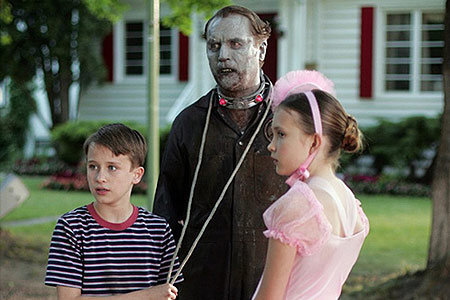
Not a Doctor Who spin-off. This film only features the one zombie, chained up in a back garden. Mainly it’s a story about a kid’s first crush, but it also returns to the recurrent zombie theme that when you have a bunch of people you can horribly, violently murder without legal or moral consequences, it doesn’t bring about the best in us.

Videogame Fan Films

Videogames loves themselves some apocalypse, as we’ve covered before and no doubt will again. The stories in these games are usually told through graffiti, carefully arranged tableaus that players run screaming past or try to shoot, and diaries that have been written and then inexplicably spread over hundreds of square miles. This leaves quite a few gaps for budding film makers to fill in, and rich background histories for them to exploit, and the weird thing is that these films often have great production values, despite the fact that the film makers can’t make any money off their creations without getting themselves sued.

Beyond Black Mesa

When you’re playing the Half Life games you can’t help but feel that there’s a huge back story that’s been written down somewhere, but which no-one has actually got around to telling you. This short continues in that tradition, without much dialogue aside from the voice-over, given by a character from the original Half-Life’s first add-on pack, Opposing Force (Kids- add-on packs are what we used to call DLC). What the short lacks in detailed plot and character, it makes up for with some truly kick-ass fight sequences and amazing special effects. It’s also a good demonstration of how the crowbar is the most badass weapon across the entire Half-Life franchise.

Fallout: Nuka Break

Okay, there aren’t really any zombies here, only ghouls that, while dead and gorified, are also sentient and non-brain-eating. Instead, it’s the story of post-apocalyptic wasteland survivors bickering, shooting people and hunting for soft drinks. They’ve got Fallout’s dark sense of humour down nicely, and have actually gone on to build a whole web series around their characters. It’s worth watching the lot (although this may take several lunch breaks), particularly if you want a Firefly-esque mix of banter, shady dealings and gunfights.

And One Film That Doesn’t Actually Have Any Zombies In It At All

Okay, this film doesn’t have anything even a bit like zombies in, but as its one of the bleakest apocalypse stories I’ve seen so I want to include it anyway:

Connected

Seriously, this film makes The Road look like a heart warming tale of optimism and fluffy bunnies. Not content with mere zombies or nuclear fallout, this film is set in a world where the very air has become toxic. Featuring zero dialogue, it’s short, brutal, and adequately shows what complete shits we can be when our own survival is at stake.

Now I'm not normally one to demand people fill in the comments on here- But if you know of any good post-apocalyptic shorts I've missed, please do let me know below.

Monday, 16 May 2011

#19 The Bible (Part Two): May 21st 2011, The Actual End of the World

(Deep booming voice) Previously, on Chris Writes About The End of the World


Yes, we’ve covered the Bible before, and the number of zombies and zombie apocalypse type events within its pages. The case for the Bible predicting all our deaths at the hands of animated, cannibalistic corpses is a slim one. Slightly more alarming however, is the apocalypse that is actually predicted in the Bible, which some people are arguing is due this Saturday. So hey, at least it’s a weekend that’s likely to have decent barbecue weather.


Here Comes The Maths
Above there’s a link to an eBible Fellowship tract that explains the thinking behind this date, however, Bible tracts have a pretty dry style, and an absolute dearth of knob gags, so I’ll do my best to summarise here.

It all starts in the book of Genesis when God says to Noah “Seven days from now I will send rain on the earth for forty days and forty nights, and I will wipe from the face of the earth every living creature I have made.”

You might have read about that flood in picture books as a kid, and maybe know songs about animals going onto the ark two by two, because if there’s one thing RE teachers are good at, it’s turning global, apocalyptic level acts of genocide into catchy tunes. However, by skipping forward a few books, you find this quote: 
“Then he used the water to destroy the ancient world with a mighty flood. And by the same word, the present heavens and earth have been stored up for fire. They are being kept for the day of judgment, when ungodly people will be destroyed.

But you must not forget this one thing, dear friends: A day is like a thousand years to the Lord, and a thousand years is like a day.”

So, God mentions the flood, then tells us that to him, one day is like a thousand years, and a thousand years is like a day.

The flood is dated as taking place in 4990 BC (because... Okay, I didn’t look this bit up, those websites are written in a really dry style with absolutely no knob gags). So:

-4990 + 7000 = 2010!

Okay, that doesn’t look impressive, sorry. But, due to a massive oversight on the part of our Gregorian Calendar makers, they forgot to include a year 0 because... Okay, I didn’t find that out either. The point is, the sum is actually:

-4990+7000 = 2011!!!

Then we get May 21st from this passage:

“In the six hundredth year of Noah’s life, in the second month, on the seventeenth day of the month, on that day all the fountains of the great deep burst forth, and the windows of the heavens were opened.”

And then... Okay, then the argument gets kind of hard to follow. It’s all up here though and involves detailed readings of Genesis, Peter, Hebrews, Matthew and others.

Basically, it is one hundred percent clear that, with detailed readings from various books written years apart, and combining that with lots and lots of sums, the beginning of the end of the world is due to start this Saturday. Because if there’s one thing we learn from the Bible, it’s that when God has a really important message to deliver to us, he likes to do it in code.
Pictured: Subtlety
Raptured
Now, don’t worry, we’re not all going to die on Saturday. The Earth isn’t destroyed in fire and brimstone until October 21st because (Look, just read the damn tract)

However, zombie lovers, May 21st is the day that (I’m quoting the tract, not the Bible here) “God will raise up all the dead that have ever died from their graves. Earthquakes will ravage the whole world as the earth will no longer conceal its dead (Isaiah 26:21). People who died as saved individuals will experience the resurrection of their bodies and immediately leave this world to forever be with the Lord. Those who died unsaved will be raised up as well, but only to have their lifeless bodies scattered about the face of all the earth. Death will be everywhere.”


This is an event commonly known as The Rapture. It’s basically when God filters out all the good people, to leave the rest of us sinners to endure some of the unholy shit that goes on in Revelations.
Basically it'll look like this. I'm so sorry for reminding you of this film.
That, for those of you who mainly get your Bible teaching from the Omens movies, is where huge balls of fire fall from the sky, and the water turns to blood, among a complete host of other fucked up things.

And weirdest of all, there is a certain, very specific kind of Christian (not to confused with regular, non-insane Christians) who has an absolute hard on for this happening. Enough of them to buy 65 million copies of the books in Tim LaHaye and Jerry Jenkins’s Left Behind series. It’s a sixteen book series, but with incredible foresight LaHaye and Jenkins got the final book in the series out in 2007. The series also spun off a videogame trilogy, which has the dubious bonus of a multiplayer mode where you get to play on Satan’s side. (Side note, am I the only one who thinks the theme music that website plays is weirdly catchy?)
Sure, you won the game asshole, but now you're definitely not getting Raptured!
One blogger far, far braver than me, has actually been trying to read the book series and pointing out just about everything that’s wrong with the writing, morals and theology of the books. Sadly, he won’t have finished reviewing the series by Saturday, so we’ll never know if it gets good towards the end.

A much better interpretation of the events of the Book of Revelation, the final word on the Biblical Apocalypse, can be found at the Brick Testament, here. I would include a picture the giant, bloodied, seven eyed lamb he build, but the guy who runs the site doesn’t like other people using his images. Which is a shame, because that photo is fucking terrifying.

So, for what will, let’s face it, probably be the final time. Let’s play the drinking game.

Do the dead rise regardless of whether they were “infected”? Ummm, maybe, kind of. Depends who you ask. Infected with God! Yeah, go on, take two shots.

Are the zombies walking dead who move slowly and can only be killed by destroying the brain?
Umm. No. No they are not.  However, what it does have is armoured fucking locusts with fucking human faces and fucking lion teeth and fucking scorpion tails, ruled by Abaddon the Destroyer. Fuck it, I’m taking a drink.

Is mankind the real monster?
No, no it is not. I’m pretty clear that the monsters here are the fucking locusts with human faces. Oh wait! No! There’s a seven headed dragon!
Have a drink anyway.

Has anybody said “They’re coming to get you Barbra!”
They’re coming to get Barbra, they’re coming to Ben, they’re coming to get you, and me, and everyone you care about. Take a drink.

Do the characters spend most of the story under siege in some manner of building?
No, not buildings. People scream to the mountains and the caves to hide them. Christ that’s depressing, I’m having another drink.

Are the people coming to rescue you incompetent or more dangerous than the zombies?
It’s supposed to be an all-loving, benevolent, omnipotent God doing this right? Fuck yes he’s incompetent and dangerous. Finish the bottle.

If you think there's hope in trying to avoid the inevitable, terrifying judgement of your Lord, and you happen to live in Norwich, you could gain a few brownie points this week by going to the charity gig Art Love World Live, where I, and other talented individuals will be trying to raise money for the victims of the Japan quake by performing comedy, poetry and music. Giving to charity is great, right? And it's THE DAY BEFORE THE RAPTURE. Basically, I think God is telling you to buy a ticket to this event.

Tuesday, 19 April 2011

#15 Fido: I Don't Want You Thinking That What We Did is Normal or Okay

A film opens on two men robbing a darkened house. As they grab as many valuables as they can and stuff them into their swag bags, the window behind them is illuminated. The camera cuts to show a car pulling into the driveway. And the audience’s first thought is- get out of the house!

We’re talking about burglars stealing someone else’s stuff, and the audience is rooting for them to get away. Whenever it comes to storytelling, we’re willing to forgive all kinds of crap if the person doing it is the protagonist. That’s why Macbeth, a play about a good man who defeats the power-mad serial killer who murdered his wife and children, is known as a tragedy.

You can see this right across the zombie genre. It’s obvious nowhere more so than I Am Legend, but numerous times, in Dawn of the Dead, The Walking Dead, 28 Days Later and Braindead, we see our survivors doing completely bastard-like things which we’re happy to forgive, because we’re rooting for them.

Which brings us to our blog on the film that I believe is Billy Connolly’s greatest acting achievement, Fido. There will be spoilers (Also I spoiled Macbeth back there... sorry about that!)
Yeah, this shits all over Mrs Brown
Fido is, in short, Lassie, but with a flesh eating zombie instead of a dog. It’s set in an idyllic, 1950s style society, fenced off from the barren, zombie-filled Wild Zone. The 1950s are a strangely popular setting for zombie stories, given the first proper zombie movie didn’t turn up until 1968. You’ll find 50s like settings everywhere from this information film to the videogame Stubbs the Zombie- Rebel Without A Pulse, not to mention the apocalyptic 50s settings of Bioshock and the Fallout games. You could argue it’s down to the contrast between the wholesome, sanitised imagery of the fifties and the looming nuclear threat, or just because they had better music back then.

In Fido everything has this sanitised veneer, full of wholesome, suburban, all-white neighbourhoods with vintage cars and worrying what the neighbours will think. The movie is, if anything, post-post-apocalyptic. The standard of living is good, and the zombies are being used as a slave race controlled by ZomCon radio collars, not much unlike the zombies at the end of Shaun of the Dead. Some zombie fundamentalists will be enraged by the idea of friendly, subservient zombies, but I point them to Bub in Day of the Dead. Actually, the zombies in this movie stick incredibly close to the Romero Rules.
"You're welcome!"
Beneath the whole exterior, it’s no surprise to find the world of Fido is all kinds of wrong. There’s the sinister weirdo over the road who is very probably fucking his zombie. There’s the family next door who were shipped out to the Wild Zone so that ZomCon’s head of security could get the house cheap, there’s the zombie-phobic father who’s biggest aim in life is to save up for funerals for him and all his family.

The dialogue is littered with tiny clues that this is seriously dark, off-kilter society, and none of the characters realise it. Then opening scene shows the ZomCon head of security asking a class of children “How many of you have ever had to kill a zombie?” followed by three or four reluctant hands. The closest Timmy gets to a father-son moment with his dad is when his dad says: “Now, I know you're not supposed to have a hand gun until you're twelve... but it can come in real handy.”
Pictured: Wholesome
Now a worse film than Fido would have made its protagonists the likeable anachronisms of this society, the one family who, despite severe up-fuckedness of everything around them, somehow developed a set of morals and principals that are perfectly in line with those of 21st century viewers who haven’t had to face a zombie apocalypse.

What’s great though, is that Fido allows its protagonists to do incredibly wrong things throughout the film, without ever pulling punches or calling them on it. When Fido, Timmy’s pet zombie (Billy Connolly) kills an old lady (a mean old lady, but still) Timmy doesn’t hesitate to cover it up. When a scheme by two bullies ends with them both being killed, Timmy’s mother drags their corpses into a shed and sets it on fire. When this leads to Timmy’s zombie being taken away, the inevitable plan to rescue him involves damaging a zombie’s collar in the front lobby of ZomCon headquarters, resulting in many, many deaths. And the film’s climax ends with Timmy switching off Fido’s collar to sick him on the ZomCon head of security. All these acts are treated with the exact same level of seriousness and sincerity that you would see from the characters in Lassie or Skipper the Bush Kangaroo. Except neither of those shows had much in the way of brutal, gory murder.
Despite the fact that that is all they ever think about.
A wussier film would have found a way to make none of these deaths Timmy’s fault, or would have included some miraculous escapes to keep Timmy’s conscience clean. Fido doesn’t bother with any of this because the film makers realise that we don’t care. The people who die horribly are people who are either anonymous, or who, while not actually evil, are people we don’t really like all that much.

Okay, this week’s drinking game:
The first shot is controversial. The characters are not under siege in some manner of building, but they are in a fenced off community, and the film’s climax involves that fence being breached.  One of the ZomCon head of security’s  key lines is towards the end, when he says: “Take a look- out there is chaos, and in here, is safety.” So, for that reasons, we’re going to have a shot.
ZomCon is shown as not exactly competent, and is pretty much the villain of the piece, so we’re going to have two shots for that, with a chaser for “Mankind is the real monster”.

The zombies are proper Romero zombies, who are walking dead (One Shot) who move slowly (One shot) and can only be killed by destroying the brain (Head shot). No less than three kiddy zombies are seen in this film, so have yourself two shots for that. And the public information films warning people against trusting the elderly show that the dead rise regardless of whether they were “infected” (Two shots).

Friday, 18 February 2011

Bonus Blog- The Dead Island Trailer: Why Killing Children Is Awesome

So, the trailer for the new game Dead Island has been released. Personally, I love it, it’s a great little three minute zombie movie that is both terrifying and sad.
Watch it here:
It’s already started to kick off some controversy, even from those who are normally the first to defend against moral guardians. The writer of this blog found it uncomfortable viewing, saying that “personally I just can't get away from the fact that I'm uncomfortable watching a graphic depiction of the horrific final moments of the life of a young girl.”
Well, good. Watching a little girl dying a horrible and violent death isn’t supposed to be punch-the-air “Fuck yes!” entertainment. The writer concedes: “Yes, perhaps that's because I'm a dad and have a beautiful daughter.” I don’t have a kid, so I can only take a poorly educated guess at how that affects your perception of the world. Similar motives have been given for Steven Spielberg’s decision to replace the guns with walkie-talkies in E.T.
Walkie-Talkies THAT SHOOT LASERS. I assume.
It’s easy to dismiss this sort of thing as being prudish Mary Whitehouse style stuff. But I think to answer this needs a more robust defence than that. Zombie apocalypse fiction is steeped in violence, and if we get our entertainment from watching bloody death on a mass scale, it’s worth, on occasion, asking what it’s actually for.
Firstly, as anyone who’s been playing the Chris Writes About The End of The World Drinking Game knows, kiddy zombies are not exactly a rarity in the genre. The premise of the zombie apocalypse is that your friends and loved ones are turned into the threat, and seeing some cute adorable little kid running (because even in Romero movies, kid actors never seem to get the hang of lurching) towards you with murder in its eyes is a great shorthand to get that point across.
However, context is everything. It’s one thing to see a zombie kid get killed as part of a longer narrative, with consequences for the characters. It’s another to see it as the entire subject of a film, particularly one as short as this. So the question is, does the trailer manage to justify its child murder?
Well, as you may have noticed, the trailer is played in backwards. I’m not trying to play the Happy Titanic argument here (Where if you rewind James Cameron’s Titanic it has a happy ending), but the order in which you tell a story is every bit as important as the story itself.
The classic example for this is Memento, where most of the scenes are played out in reverse chronological order, intercut with flashbacks that play out in chronological order, until at the end of the film the two storylines meet in the middle where it turns out that $£*()$£*()”$*()£$*£)$(*. In the trailer, the same thing happens. We get the reversed storyline of the corpse magically leaping up through the magically mending window and latching onto her father’s neck, intercut with flashbacks to the frightened little girl running down a hotel corridor.
In Memento, when the backward and forward moving narratives meet, it brings us to the most important part of the film. In the Dead Island trailer, when the backward and forward moving narratives meet, it is on the image of a father reaching out to his child. When we see that image, we know it won’t end well. But that’s not the point, the point is, the video takes a scene of bloody, terrifying violence, then gives the scene context, showing that the survivors are actually fighting for something.
You can see the trailer in chronological order here.
In this version, the story is a straight forward tale of a little girl running away from zombies, then dying horribly. It’s pretty bleak, but it doesn’t carry the same punch as the trailer seen the way it was originally intended.
In the blog link at the beginning of this post, Ben Parfitt argues that the trailer “uses an image of a dead girl and images of her dying to create an emotional bond with a product.”
Well, yes. It does. Although I have to say I find it far less distasteful and manipulative than Paul Whitehouse remaking The Sixth Sense for Aviva.
What this advert does is tell a story, to advertise a game that will also tell a story. Personally I find it refreshing to see a videogame advert that presents violence as anything other than totally awesomeIf the videogame that it’s advertising manages to resemble the tone of this trailer at all, it’s going to be a very special game indeed.
We’ll return to our regular posting schedule on Monday, when I’ll be writing about a romantic comedy. No prizes for guessing which one.